AirSkyBuster : Aircraft and Airplane

Free Online Aircraft Images Wallpaper Collection. Aircraft pictures collection. Airplane images wallpaper gallery. Specification and images of aircraft.


A-10 Thunderbolt
A-29 Super Tucano
A-4 Skyhawk
A-5 Vigilante
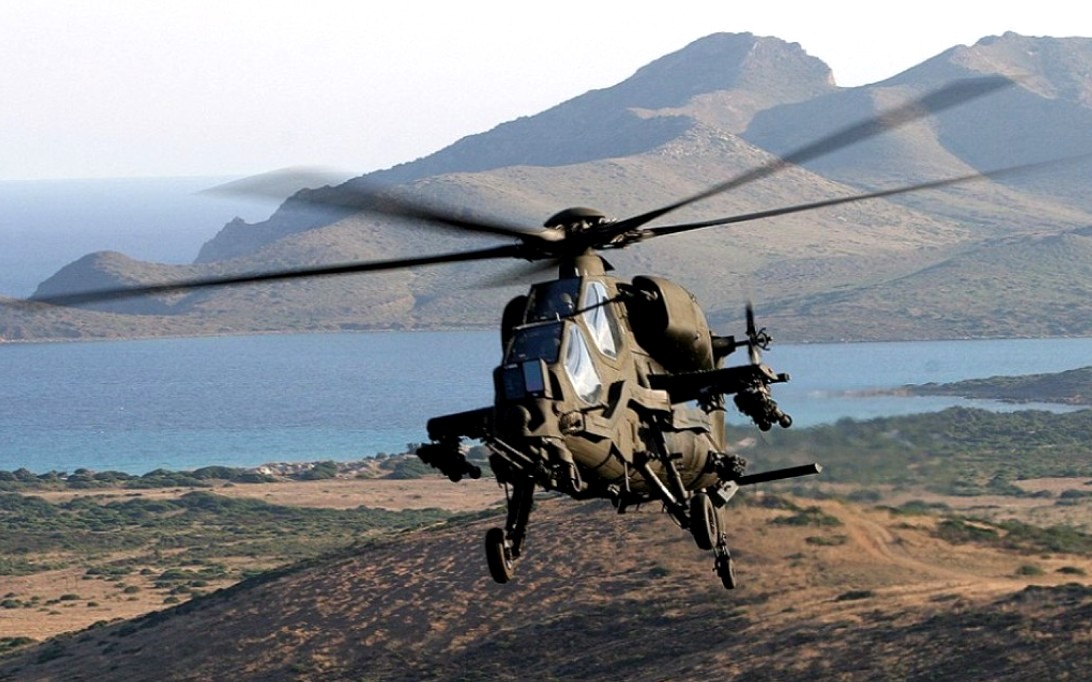
A129 Mangusta
AC-130 Spectre
Aero L-39 Albatros
AH-1W Super Cobra
AH-1Z Viper
AH-6 Little Bird
AH-64 Apache
Airbus A340
Airbus A380
Airbus A400M
Alpha Jet
Antonov An-225
AS332 Super Puma
Atlas Cheetah
ATR 72-500
AV-8B Harrier II
Avro Vulcan
B-1 Lancer
B-2 Spirit
B-52 Stratofortress
B-70 Valkyrie
BAC 167 Strikemaster
Boeing 737-900ER
Boeing 747-8 Intercontinental
Boeing 787 Dreamliner
C-130J Super Hercules
C-17 Globemaster III
C295
CH-47 Chinook
CH-53E Super Stallion
Chengdu J-20 Black Eagle
CN-235
Concorde
Dassault Rafale
E-2 Hawkeye
Eurocopter Tiger
Eurocopter X3
Eurofighter Typhoon
F-117 Nighthawk
F-14 Tomcat
F-15 Eagle
F-15SE Silent Eagle
F-16 Fighting Falcon
F/A-18E/F Super Hornet
F-20 Tigershark
F-22 Raptor
F-35 Lightning II
F-4 Phantom II
F-5E Tiger II
Gulfstream III
HAL Tejas
HESA Saeqeh
HH-65 Dolphin
HU-16 Albatross
IA 63 Pampa
JF-17 Thunder
Kamov Ka-27 Helix
Kamov Ka-50
Kamov Ka-52 Alligator
Kawasaki OH-1 Ninja
KC-10 Extender
Lockheed C-5 Galaxy
M-346 Master
Mi-28 Havoc
MiG-23 Flogger
MiG-25 Foxbat
MiG-29 Fulcrum
Mikoyan MiG-35
MiG-31 Foxhound
Mil Mi-17 Hip
Mil Mi-24 Hind
Mil Mi-35 Hind
Mirage 2000
Mirage IV
Mitsubishi F-2
OV-10 Bronco
Phenom 300
Q-5 Fantan
RAH-66 Comanche
RQ-4 Global Hawk
SAAB JA 37 Viggen
SAAB JAS 39 Gripen
Sea Harrier
SEPECAT Jaguar
SH-2G Super Seasprite
Shenyang J-8 Finback
Sikorsky X2
Soko G-4 Super Galeb
SR-71 Blackbird
Sukhoi Su-24 Fencer
Sukhoi Su-25 Frogfoot
Sukhoi Su-27 Flanker
Sukhoi Su-30
Sukhoi Su-34 Fullback
Sukhoi Su-35 Flanker-E
Sukhoi Su-37 Flanker-F
Sukhoi Su-47 Berkut
Sukhoi T-50 PAK FA
Super Étendard
T-38 Talon
T-45 Goshawk
T-50 Golden Eagle
Tornado IDS
Tupolev Tu-160
Tupolev Tu-22M
Twin Otter Series 400
V-22 Osprey
WZ-10
X-47B
Yakovlev Yak-130 Mitten
Yakovlev Yak-141 Freestyle
YF-23 Black Widow II

Kamov Ka-27 Helix (Wallpaper 1)

Friday, December 16, 2011

Kamov Ka-27 Helix Helicopter Wallpaper 1
image dimensions : 1200 x 800
Kamov Ka-27 Helix (Wallpaper 1)
One. Widescreen, wallpaper, helicopter, naval, military, Russian, Air Force, attack, aircraft, airplane. photo, image, picture, review, specification.
The Kamov Ka-27 (NATO reporting name 'Helix') is a military helicopter developed for the Soviet Navy, and currently in service in Russia, Ukraine, Vietnam, South Korea, People's Republic of China, Republic of China and India. Variants include the Ka-29 assault transport, the Ka-28 downgraded export version, and the Ka-32 for civilian use. The helicopter was developed for ferrying and anti-submarine warfare. Design work began in 1970 and the first prototype flew in 1973. It was intended to replace the decade-old Kamov Ka-25, and is similar in appearance to its predecessor due to the requirements of fitting in the same hangar space. Like other Kamov military helicopters it has a co-axial rotor, removing the need for a tail rotor. A Russian Navy KA-27 helicopter from the Russian Udaloy class destroyer RS Serveromorsk (DDG 619) conducted interoperability deck landing training on board USS Mount Whitney on 22 July 2010. Designed to replace the Ka-25 Hormone as ship on-board helicopter of the Soviet Navy, it has more powerful engines, a bit long fuselage and a redesigned tail. Modern variants include naval anti-submarine warfare (ASW) Ka-28, the search-and-rescue (SAR) Ka-27PS, the air assault Ka-29, and the Ka-31 airborne early warning helicopter equipped with the E801M Oko (Eye) air and sea surveillance radar the ka-27 come in four versions, the ka-27, 28, 29, and 32. the ka-27 is a naval helicopter with the co-axial rotors, having two variants, the ka-27pl which are used in pairs for anti-submarine use, and the ka-27ps which is used for search and rescue. the ka-28 is an export version of the ka-27pl. the ka-29 and ka-29tb are assault transport helicopters. the ka-32t is a utility transport helicopter, and the 32s is a utility version for operating in adverse weather. the 32k is a flying crane version of the ka-27. Ka-27 made serially from 1981. For the Navy it has been made at serial factories 353 helicopters Ka-27 (in a Kumertau) various updatings. Nine Ka-31 helicopters have been ordered by India, for deployment on the INS Viraat aircraft carrier and Talwar frigates. First deliveries are scheduled for late 2003. Also based on the Ka-27, the multi-role Ka-32 has been chosen by South Korea for search and rescue duties. Crew: 1-3, plus 2-3 specialists Length: 11.30 m (37 ft 1 in) Rotor diameter: 15.80 m (51 ft 10 in) Height: 5.50 m (18 ft 1 in) Empty weight: 6,500 kg (14,300 lb) Loaded weight: 11,000 kg (24,200 lb) Useful load: 4,000 kg (8,800 lb) Max takeoff weight: 12,000 kg (26,400 lb) Powerplant: 2 x Isotov turboshaft engines, 1,660 kW (2,225 shp) each • Performance Maximum speed: 270 km/h (145 knots, 166 mph) Cruise speed: 205 km/h (110 knots, 126 mph) Range: 980 km (530 nm, 605 mi) Service ceiling: 5,000 m (16,400 ft) Armament Ka-27 : 2 torpedoes (AT-1M, VTT-1, UMGT-1 Orlan, APR-2 Yastreb), or 8 PLAB-250-120 depth charges , or 36 sonobuoys RGB-NM and RGB-NM-1 Ka-29 : 1 x 7.62 mm MG, or 1 x 30 mm A242 cannon, and 55 mm rocket pods or 4 ATGMs Avionics Ka-27 : Radar, MAD or dipping sonar, sonobuoys (Ka-27) Ka-29 : RWR, ESM, EW systems (Ka-29) The Ka-27 "Helix" is the primary multi-role helicopter for the Russian Navy. It operates off of ships and performs a multitude of duties including, but not limited to: anti-submarine warfare (its primary role), search and rescue, maritime patrol, anti-surface warfare and transport duties. The Ka-27 was introduced into the Soviet Navy as a replacement for the aging Ka-25 "Hormone" in 1982. The Ka-27 was designed much to the same dimensions as the Ka-25, so that it could utilize the existing decks on Soviet warships designed for the Ka-25, but although the two have many design similarities, the Ka-27 is distinguishably longer than the Ka-27. The first version of the Ka-25 to enter service was the Ka-25PL "Helix-A". The PL was designed strictly as an Anti-Submarine Warfare (ASW) platform. It can, however, participate in limited rescue and transport operations. For the ASW role, the Helix has a weapons bay under the fuselage that can accommodate torpedoes and other stores as well as sonobuoys, but as of yet, there are no accurate accounts of the weapons capabilities or the possible armament of the Ka-27PL. The second version of the "Helix" to enter service was the Ka-29TB "Helix-B". This version is quite different than the -25PL in a number of ways, because the -27TB is an assault helicopter. It is designed to haul 16 fully armed troops from ship into combat in its spacious cabin. Instead of the weapons bay under the fuselage, there is a whole lot of armor plating. The rescue winch has been removed from above the left rear entrance, and all ASW capabilities have been lost in the conversion from the patrol and ASW role to the assault role. The final version of the "Helix" to enter service was the Ka-27PS "Helix-D", which is essentially the same as the civil version, the Ka-32 "Helix-C". Both versions have no ASW capability, no rescue capability, and are bound strictly to the transport role. Operators: Algeria, Ukraine, China, Vietnam, the Soviet Union / Russia and India.

Labels: ,

Mil Mi-17 Hip (Wallpaper 1)

Thursday, October 27, 2011

Mil Mi-17 Hip, Helicopter Wallpaper 1
image dimensions : 1092 x 682
Mil Mi-17 Hip (Wallpaper 1)
One. Mil Mi-17 Hip, Helicopter, Russia, Soviet, Air Force, Attack, Aircraft, Airplane. Photo, image, picture, wallpaper, review, specification.
The Mil Mi-17 (also known as the Mi-8M series in Russian service, NATO reporting name "Hip") is a Russian helicopter currently in production at two factories in Kazan and Ulan-Ude. Mil Mi-8/17 is a medium twin-turbine transport helicopter that can also act as a gunship. Developed from the basic Mi-8 airframe, the Mi-17 was fitted with the larger TV3-117MT engines, rotors, and transmission developed for the Mi-14, along with fuselage improvements for heavier loads. Optional engines for 'hot and high' conditions are the 1545 kW (2070 shp) Isotov TV3-117VM. Recent exports to China and Venezuela for use in high mountains have the new VK-2500 version of the engine with FADEC control. The designation Mi-17 is for export; Russian armed forces call it Mi-8MT. The Mi-17 can be recognized because it has the tail rotor on the port side instead of the starboard side, and dust shields in front of the engine intakes. Engine cowls are shorter than on the TV2 powered Mi-8, not extending as far over the cockpit, and an opening for bleed-valve outlet is present forward of the exhaust. Actual model numbers vary by builder, engine type, and other options. As an example, the sixteen new Ulan Ude built machines delivered to the Czech Air Force in 2005 with –VM model engines were designated as Mi-171Sh, a development of the Mi-8AMTSh. Modifications include a new large door on the right side, improved Czech-built APU, Kevlar armor plates around the cockpit area and engines. Eight have a loading ramp in place of the usual clamshell doors, and will load a vehicle up to the size of an SUV. In May 2008 licensed production of the Mi-17 started in China, with production being led by Mil Moscow Helicopter Plant JSC and the Sichuan Lantian Helicopter Company Limited in Chengdu, Sichuan province. The plant built 20 helicopters in 2008, using Russian Ulan-Ude-supplied kits; production is expected to reach 80 helicopters per year eventually. The variants to be built by Lantian will include Mi-171, Mi-17V5, and Mi-17V7. In May 1999, during Operation "SafedSagar", the Mi-17 was used in the first air phase of Kargil operations by 129HU of the IAF against Pakistani regular and Pakistan backed militant forces. One Mi-17 was lost in combat to shoulder fired missiles. Mi-17s were withdrawn and attacks by fixed-wing aircraft began. The Mi-17 was used extensively by the Sri Lanka Air Force in the Sri Lankan Civil War. Seven of them were lost in combat and attacks on airports. The Mi-17 was used by the Colombian Army in Operation Jaque. In 2001, the Macedonian Air Force used the Mi-17 against Albanian insurgents. The Mi-17 is also used by search and rescue teams such as the Malaysian Fire and Rescue Department. Executive Outcomes used them extensively in its operations in the Angolan Civil War. The Mi-17 is used as a commercial passenger aircraft by Air Koryo, national airline of the DPRK. Previous flights include those between Pyongyang and Kaesong and Pyongyang and Haeju. The Mexican Navy utilizes their Mi-17s for anti-narcotic operations such as locating marijuana fields and dispatching marines to eradicate the plantations. The Slovakian forces operate Mi-17s in Kosovo as part of KFOR. Croatian air force operates two Mi-17 in Kososvo as a part of KFOR. Both the pro-Gaddafi and anti-Gaddafi forces in the 2011 Libyan uprising have operated the type. On 28 October 2008 the Royal Thai Army announced a deal to buy 6 Mi-17s to meet its requirement for a medium-lift helicopter. This is the first time the Thai military has acquired Russian aircraft instead of American.[5] Flight International quotes the Thai army’s rationale: "We are buying three Mi-17 helicopters for the price of one Black Hawk. The Mi-17 can also carry more than 30 troops, while the Black Hawk could carry only 13 soldiers. These were the key factors behind the decision." On 15 December 2008, it was reported that India would purchase 80 Mi-17IV helicopters, which would be delivered to the Indian Air Force between 2010 and 2014 to replace aging Mi-8s. An order for a further 59 was placed in August 2010. On 11 June 2009, it was announced that the United States had handed over four Mi-17 cargo helicopters to the Pakistan Army to facilitate its counter-terrorism operation. (Note – A leaked US embassy cable published on Wikileaks describes the request made by Pakistan Chief of Army Staff General Kayani for additional helicopters. On 10 July 2009, it was announced that Chile would pursue talks with Russia to purchase five Mi-17 multi-role helicopters for the Chilean Air Force, despite pressure from the United States. On 16 September 2009, US Navy's Navair delivered the last two of four Mi-17s to the Afghan National Army Air Corps. On 19 June 2010, it was announced that the US government would buy and refurbish 31 Mi-17 helicopters from Russia to supply the Afghan Army. The US is reportedly considering adding the helicopter to the US military for Special Forces use in order to obscure troop movements. The US has used some Mi-8s and Mi-17s for training, and has purchased units for allies in Iraq, Afghanistan and Pakistan. In August 2010 a contract was signed by the Argentine Air Force for two Mi-17Es, plus an option on a further three, to support Antarctic bases. In September 2010, the Polish Defense Minister announced that his country would buy 5 brand new Mi-17 from Russia, to support Polish operations in Afghanistan. As of 2011 all 5 Mi-17-1V were delivered. In 2010, the Kenya Air Force purchased 3 Mi-171 medium-lift helicopters to supplement its fleet of IAR 300 Pumas, which have been flying for more than 20 years. In 2011, Chief of Staff of Afghanistan Army Abdul Wahhab Wardak announced that the US government will pay US$367.5 million to Russian producers for 21 Mi-17s to Afghanistan. He explained the choice with the acquaintance of the Afghan technical and pilot staff with the helicopter type and that it is better suited for Afghanistan's environment.

Labels: ,

SH-2G Super Seasprite (Wallpaper 1)

Sunday, October 16, 2011

SH-2G Super Seasprite, Helicopter Wallpaper 1
image dimensions : 1092 x 682
SH-2G Super Seasprite (Wallpaper 1)
1. Photo wallpaper gallery of SH-2G Super Seasprite, multirolle helicopter. 1. SH-2G Super Seasprite pictures and images collection.
The Kaman SH-2G Super Seasprite is a ship-based helicopter with anti-submarine, anti-surface threat capability, including over-the-horizon targeting. This aircraft extends and increases shipboard sensor and weapon capabilities against several types of enemy threats, including submarines of all types, surface ships, and patrol craft that may be armed with anti-ship missiles. It was originally developed for the United States Navy in 1980s. The SH-2G's primary missions include anti-submarine and anti-surface warfare, anti-ship missile defense, and anti-ship surveillance and targeting. Secondary missions may include medical evacuation, search and rescue, personnel and cargo transfer, as well as small boat interdiction, amphibious assault air support, gun fire spotting, mine detection and battle damage assessment. In 1985 the SH-2G program was started. The US Navy wanted better anti-submarine capabilities and felt upgrading current helicopters would be a more cost effective approach. The prototype YSH-2G first flew on 2 April 1985. The prototype was a modified SH-2F fitted with two more powerful General Electric T700-GE-401/401C engines. The G-model has a reinforced upper fuselage to support the new, heavier engines. The SH-2G also has multifunctional displays and new avionic systems. The Navy began receiving Airborne Mine Counter Measures (AMCM) hardware with the Kaman Magic Lantern laser mine detection system in December 1996. The US Navy's final production order of the SH-2F was in Fiscal Year 1986 with the last six orders switched to the SH-2G variant. In the late 1980s and early 1990s the Royal Australian Navy (RAN) decided it needed an intermediate helicopter to operate from both ANZAC class frigates and an Offshore Patrol Vessel (OPV) it had hoped to build in conjunction with Malaysia. The OPVs, being smaller than the Anzac class, required a smaller helicopter than those being operated by the RAN at the time. In 1997, the Australian Government signed a A$667 million contract with Kaman to purchase 11 upgraded Super Seasprites. However, the OPV was effectively abandoned in February 1998, when Malaysia selected a German tender over the one submitted by the Australian company Transfield, now known as Tenix. The RAN began operating SH-2G(A) Super Seasprites in 2003. By February 2007, 10 Super Seasprites had been delivered to the Royal Australian Navy's Fleet Air Arm, to be operated by 805 Squadron. However, as early as 2005 up to 40 deficiencies had been identified in the helicopters, including their inability to operate in bad weather and low light conditions, and their inability to meet Australian airworthiness certification standards. This led to the helicopters being restricted to "passenger and supply transport in good weather", and in May 2006 to the complete grounding of the squadron. The problems were attributed to the fitting of a late 1990s avionics package to a 1960s airframe. In February 2007, The Australian ran an article announcing that the Seasprite project is "almost certain to be scrapped". At this point the project was running six years over schedule, and its cost had blown out to A$1.1 billion, with A$45 million in additional costs if a decision was taken to upgrade the helicopters. If approved, the upgrade would take a further 29 months, with the squadron not reaching full operational status until at least 2010. Scrapping or selling of the helicopters was an option also under consideration, with possible replacements including purchase of the NHIndustries NH90, or expansion of the number of S-70 Seahawks currently in service. On 25 May 2007 The Age reported that the government had decided to persevere with the Seasprite helicopter project. Defence Minister Brendan Nelson announced that the government would take steps to ensure that contractor progress was measured against milestones during the course of additional work. Return of the Seasprites to flying operations would involve a series of controlled steps to assess the safety, performance and reliability of the aircraft. Following the election of the new Labor government, The Australian reported on 31 January 2008 that the SH-2G(A) program was likely to be cancelled due to cost and time over-runs, as well as the aircraft still not being operational despite the original contract being signed in 1997. The same article also noted that Sikorsky had submitted an offer to the Australian government consisting of a number of 'off the shelf' helicopters, likely a SH-60/S-70B variant, as a replacement for the troubled SH-2G(A)s. Following a review of the project, the Australian Government cancelled the contract for the helicopters on 5 March 2008. Kaman Corp confirmed that it had been notified by the Labor Government that it would end the SH-2G(A) program "on mutually agreed terms". The decision to cancel the purchase was supported by the federal opposition. Left without aircraft, 805 Squadron was disbanded on 26 June 2008. Australia returned its SH-2G(A)s to Kaman. In June, the entrepreneur Dick Smith offered a $50,000 award for investigative journalism to examine the cancelled contract, on issues of accountability and related Government policies, without result.

Labels: ,

Eurocopter X3 (Wallpaper 1)

Friday, July 22, 2011

Eurocopter X3 Helicopter Wallpaper 1
image dimensions : 1092 x 682
Eurocopter X3 (Wallpaper 1)
1. Photo wallpaper gallery of Eurocopter X3 Helicopter aircraft. 1. Eurocopter X3 Helicopter aircraft pictures and images collection.
As Eurocopter presses ahead with development of its X3 technology demonstrator with a view to introducing the radical high-speed technology commercially in six years, the key challenge is not technical development, but finding an agency to certificate the machine. Chief executive Lutz Bertling, speaking at his annual state-of-Eurocopter briefing in Paris, said dealings with the Federal Aviation Administration or European Aviation Safety Agency will "take time", because the X3, with its main helicopter-style lifting rotor and side-mounted forward-drive propellers, may been seen as something in-between a helicopter and a fixed-wing aircraft. Meanwhile, development of the X3 - which first flew in September 2010, is going "surprisingly" well, says Bertling. The flight simulator, which has been in operation for two years, turned out to be highly representative of the actual aerial performance, so development is proceeding with relative ease, he says. Separately, Bertling pointed to a 2011 launch of the much-anticipated X4, which he promised will be a revolutionary step forward in helicopter technology. Bertling insists the machine - destined to replace the AS365 Dauphin - will be a "game changer" that introduces a "completely different" way of flying compared with today's helicopters. As for the X3, Eurocopter hopes to introduce the technology on most new models eventually - ideally as what would be in effect an alternative to a conventional helicopter, with a great degree of mechanical similarity. The first use of X3 technology is likely to come in about six years, as a replacement for the EC225 Super Puma.
Eurocopter X3 (Wallpaper 2)
Eurocopter X3 (Wallpaper 3)
Eurocopter X3 (Wallpaper 4)

Labels: ,

WZ-10 Attack Helicopter (Wallpaper 1)

Wednesday, July 6, 2011

WZ-10 Attack Helicopter Wallpaper 1
image dimensions : 1092 x 682
WZ-10 Attack Helicopter (Wallpaper 1)
1. Photo wallpaper gallery of WZ-10 Attack Helicopter fighter jet aircraft. 1. WZ-10 Attack Helicopter fighter jet aircraft pictures and images collection.
The WZ-10 is an attack helicopter developed by the People's Republic of China. It is designed primarily for anti-tank missions but is believed to have a secondary air-to-air capability as well. It is being built by Changhe Aircraft Industries Corporation (CAIC). The origins of WZ-10 date as far back as 1979, when China began to explore ways of countering the advance of large enemy armour formations that would attack in great numbers. The resulting analysis by Chinese military establishments suggested that the most effective conventional way (i.e. without use of nuclear weaponry) was to attack enemy armour formations from the air and the attack helicopter was the best choice. Eight Aérospatiale Gazelle armed with Euromissile HOT were procured to further evaluate this option and the results lead to the birth of the WZ-10 project. The resulting evaluation of modern warfare, with combined military arms, in the early to mid 1980s had revealed that the current armed helicopters in China's inventory no longer met the requirements of modern combat, because all of them were converted from civilian helicopters which made them vulnerable in intense combat situations. These civilian helicopters converted for military use could be used as scouts at best, it was found that facing off enemy armour formations required a dedicated attack helicopter such as the AH-1 Cobra or Mil Mi-24. As a result of these findings, the Chinese military evaluated the Agusta A129 Mangusta in the mid 1980s. I n 1988 a defence agreement was signed between the USA and China authorising the sale of AH-1 Cobra attack helicopters to China, along with permission to produce the BGM-71 TOW in China under licence. But just as China was preparing to do further evaluations, China was sanctioned by the west after the Tiananmen Square protests of 1989. Afterwards, as China turned to Eastern European countries for help in the period between 1990 through 1991, the colour revolutions also prevented China from obtaining attack helicopters. As China attempted to import the Mil Mi-24 from Bulgaria and Russia, all of them rejected Chinese requests. While attempting to import foreign attack helicopters resulted in failure, domestic research continued to reveal the shortcomings of China's current fleet of helicopters exposed by war games. The Chinese military had concluded that not only was the Chinese helicopter force inadequate, so was the structure of its armed force. In order to check large enemy armour formations successfully with attack helicopters, the helicopter force had to be under the command of the army instead of the air force. People's Liberation Army Ground Force Air Force (PLAGFAF) was established as a result and starting from a mere 9 Harbin Z-9, it would eventually expand to over 500 in the next two decades. More importantly, despite the lack of attack helicopters, research was continued and the PLAGFAF used other armed helicopters to simulate future attack helicopters, exploring tactics and strategies, helping to define the requirements for the future WZ-10.

Labels: ,

Mil Mi-24 Hind (Wallpaper 1)

Thursday, June 23, 2011

Mil Mi-24 Hind attack helicopter wallpaper 1
image dimensions : 1092 x 682
Mil Mi-24 Hind (Wallpaper 1). Photo wallpaper gallery of Mil Mi-24 Hind helicopter attack and gunship aircraft - 1. Mil Mi-24 Hind helicopter attack and gunship aircraft pictures and images collection - 1. The Mil Mi-24 is a large helicopter gunship (and attack helicopter) and low-capacity troop transport (with room for 8 passengers) produced by Mil Moscow Helicopter Plant and operated from 1972 by the Soviet Air Force, its successors, and over thirty other nations. In October 2007, the Russian Air Force announced it would replace its 250 Mi-24 helicopter gunships with 300 more modern Mi-28s and possibly Ka-50s by 2015. In NATO circles the export versions, Mi-25 and Mi-35, are simply denoted with a letter suffix as "Hind D" and "Hind E" respectively. Soviet pilots called the aircraft летающий танк (letayushchiy tank, “flying tank”). More common unofficial nicknames were Крокодил (Krokodil, “Crocodile”), due to the helicopter's new camouflage scheme[4] and Стакан (Stakan, “Glass”), because of the flat glass plates which surround the three place cockpit of the Mi-24A. During the early 1960s, it became apparent to Soviet designer Mikhail Leont'yevich Mil that the trend towards ever-increasing battlefield mobility would result in the creation of flying infantry fighting vehicles, which could be used to perform both fire support and infantry transport missions. Mil Mi-24 Hind (Wallpaper 1). Photo wallpaper gallery of North American Mil Mi-24 Hind helicopter attack and gunship aircraft - 1. North American Mil Mi-24 Hind helicopter attack and gunship aircraft pictures and images collection - 1. The first expression of this concept was a mock-up unveiled in 1966 in the experimental shop of the Ministry of Aircraft's factory number 329 where Mil was head designer. The mock-up designated V-24 was based on another project, the V-22 utility helicopter, which itself never flew. The V-24 was similar in layout and configuration to the UH-1A Huey, with a central infantry compartment that could hold eight troops sitting back to back, and a set of small wings positioned to the top rear of the passenger cabin, capable of holding up to six missiles or rockets, with a twin-barreled GSh-23L cannon fixed to the landing skid. Mil proposed the design to the heads of the Soviet armed forces, and while he had the support of a number of strategists in the armed forces, he was opposed by several more senior members of the armed forces who believed that conventional weapons were a better use of resources. Despite the opposition, Mil managed to persuade the defence minister's first deputy, Marshal Andrey A. Grechko, to convene an expert panel to look into the matter. While the panel's opinions were mixed, supporters of the project eventually held sway, and a request for design proposals for a battlefield support helicopter was issued. The development of gunships and attack helicopters by the US Army during the Vietnam War convinced the Soviets of the advantages of armed helicopter ground support doctrine. This had a positive influence on moving forward with the development of the Mi-24. Mil Mi-24 Hind (Wallpaper 1). Photo wallpaper gallery of North American Mil Mi-24 Hind helicopter attack and gunship aircraft - 1. North American Mil Mi-24 Hind helicopter attack and gunship aircraft pictures and images collection - 1.

Labels: ,

Kamov Ka-52 Alligator (Wallpaper 1)

Thursday, June 16, 2011

Kamov Ka-52 Alligator Helicopter Wallpaper 1
image dimensions : 1092 x 682
Kamov Ka-52 Alligator (Wallpaper 1). Photo wallpaper gallery of Kamov Ka-52 Alligator Attack Helicopter 1. Kamov Ka-52 Alligator Russian Attack Helicopter pictures and images collection 1. In the early 1980s, while the comparative tests of the V-80 (Ka-50 prototype) and the Mi-28 were still ongoing, the Kamov design team came up with a proposal to develop a dedicated helicopter to conduct battlefield reconnaissance, provide target designation and support group attack helicopter operations. However, the economic hardships that hit the nation in the late 1980s hampered the development program of the new type. This prompted Kamov's Designer General to choose a modified version of Ka-50 on which to install the recce and target designation system. The modified "Hokum" required a second crew member to operate the optronics/radar recce suite. Kamov decided to use side-by-side seating arrangement, due to the verified improvements in co-operation between the crew members. This twin-seat version of the "Hokum" received a designation of Ka-52. Manufacturing of the first Ka-52 airframe began in mid-1996. Serial production was started in autumn 2008. The Ka-52 is another modification of the basic Ka-50 design. Photo wallpaper gallery of Kamov Ka-52 Alligator Attack Helicopter 1. Kamov Ka-52 Alligator Russian Attack Helicopter pictures and images collection 1. It features a two-seat side-by-side cockpit, and is designed to detect targets and redistribute them among supporting Ka-50s and Mi-28s. In comparison to the original Ka-50, it has a somewhat "softer" nose profile due to the wider cockpit, reduced cockpit armor and large nose-mounted radome. Equipment includes radar with two antennas—mast-mounted for aerial targets and nose-mounted for ground targets, and "Samshite" day-and-night TV/thermal sighting system in two spherical turrets (one over the cockpit and the second under the nose). The Ka-52 retains the side-mounted cannon and six wing-mounted hardpoints of the original Ka-50. The Ka-52 has completed the state trials. Fourth operationally configured helicopter was taken on strength by the Russian Air Force on 10 February 2011. Under the current State Defense Procurement Plan, Russian Armed Forces will receive 30 helicopters by 2012. A second batch of 36 helicopters will start rolling off the production line in early 2012. 696th Instructor and Research Helicopter Regiment is operating eight helicopters, in varying degrees of capability and/or modification, for the purpose of ongoing research and development. Photo wallpaper gallery of Kamov Ka-52 Alligator Attack Helicopter 1. Kamov Ka-52 Alligator Russian Attack Helicopter pictures and images collection 1.

Labels: ,

RAH-66 Comanche (Wallpaper 1)

Monday, June 13, 2011

RAH-66 Comanche Attack Helicopter Wallpaper 1
image dimensions : 1092 x 682
RAH-66 Comanche (Wallpaper 1)
Photo wallpaper gallery of RAH-66 Comanche Reconnaissance / Attack helicopter 1. Eurocopter RAH-66 Comanche Reconnaissance / Attack helicopter pictures and images collection 1.
The Boeing/Sikorsky RAH-66 Comanche was an advanced U.S. Army military helicopter intended for the armed reconnaissance role, incorporating stealth technologies. It was also intended to designate targets for the AH-64 Apache. The RAH-66 program was canceled in 2004 before it was fielded. In 1982 the U.S. Army started the Light Helicopter Experimental (LHX) program to replace UH-1, AH-1, OH-6, and OH-58 helicopters. This requirement was changed to a reconnaissance helicopter by 1988. Request for proposals for the new helicopter type were released in June 1988. In October 1988, the Boeing-Sikorsky and Bell-McDonnell Douglas teams received contracts for their designs. The program's name was changed to Light Helicopter (LH) in 1990. RAH-66 Comanche (Wallpaper 1). Photo wallpaper gallery of RAH-66 Comanche Reconnaissance / Attack helicopter 1. Eurocopter RAH-66 Comanche Reconnaissance / Attack helicopter pictures and images collection 1. In April 1991, the Boeing-Sikorsky team was selected as the contest winner and received a contract to build four prototypes. Also that month the helicopter was designated RAH-66 Comanche by the Army. In 1993, the first prototype began assembly. The following year the number of prototypes was cut to two. The first Comanche prototype was rolled out of the Sikorsky Aircraft's helicopter production facility on 25 May 1995. The prototype's maiden flight occurred on 4 January 1996. Flight qualification tests and evaluations were conducted for the two DEM/VAL (Demonstration and Validation Phase) prototypes. Through the early 2000s, the U.S. Army planned to purchase over 1,200 Comanches to fill the scout and light attack roles, with deliveries of operational RAH-66s beginning in 2006. Flight testing was conducted with the two prototypes. The first Comanche prototype, serial 94-0327, completed 318 flights over 387 hours before ending its testing career in January 2002. After meeting key criteria, the RAH-66 entered the Engineering and Manufacturing Development (EMD) phase on 1 June 2000. Efforts to reduce empty weight by 200 lb (90.7 kg) or 2% to meet target weight were begun later that year. The second prototype, 95-0001, was in flight testing until May 2001. In 2002 the program was restructured and the number of Comanches to be purchased was cut to 650. RAH-66 Comanche (Wallpaper 1). Photo wallpaper gallery of RAH-66 Comanche Reconnaissance / Attack helicopter 1. Eurocopter RAH-66 Comanche Reconnaissance / Attack helicopter pictures and images collection 1.

Labels: ,

HH-65 Dolphin (Wallpaper 1)

Saturday, June 11, 2011

HH-65 Dolphin Helicopter Wallpaper 1
image dimensions : 1092 x 682
HH-65 Dolphin (Wallpaper 1). Photo wallpaper gallery of HH-65 Dolphin SAR helicopter 1. Eurocopter HH-65 Dolphin helicopter aircraft pictures and images collection 1. The Eurocopter HH-65 Dolphin is a twin-engined, single main rotor, MEDEVAC-capable Search and Rescue (SAR) helicopter operated by the United States Coast Guard (USCG). It is a variant of the French-built Eurocopter AS365 Dauphin. The SA366 G1 Dauphin version was selected by the United States Coast Guard in 1979 as its new short range recovery (SRR) air-sea rescue helicopter, replacing the Sikorsky HH-52A Sea Guard. In total 99 helicopters, optimised for the USCG's search and rescue role tasks and given the designation HH-65A Dolphin, were acquired. Unlike the HH-52, the HH-65A is not able to perform water landings. The HH-65 normally carries a crew of four: Pilot, Copilot, Flight Mechanic and Rescue Swimmer. The Dolphin was manufactured by Aerospatiale Helicopter Corporation (now American Eurocopter) in Grand Prairie, Texas. HH-65 Dolphin (Wallpaper 1). Photo wallpaper gallery of HH-65 Dolphin SAR helicopter 1. Eurocopter HH-65 Dolphin helicopter aircraft pictures and images collection 1. Textron Lycoming (now Honeywell) built the Dolphin's LTS101-750B-2 turboshaft engines in Williamsport, Pennsylvania, and Rockwell Collins manufactured the HH-65's electronic systems in Cedar Rapids, Iowa. The HH-65 Dolphin is used for homeland security patrols, cargo, drug interdiction, ice breaking, military readiness, pollution control, and search and rescue missions. The HH-65 is known for its Fenestron tail rotor and its autopilot capabilities, which can complete an unaided approach to the water and bring the aircraft into a stable 50 ft (15 m) hover, or automatically fly search patterns, an ability which allows the crew to engage in other tasks. In order to comply with U.S. regulations relating to local content (based primarily on the value of individual components of the aircraft), engineering changes were required — notably, the SA365's original Turbomeca Arriel engines were replaced with LTS101-750B-2 powerplants, which at the time represented the cutting edge of turboshaft design. Unfortunately, initial teething problems with this engine worsened as the HH-65's weight grew, resulting in several in-flight loss-of-power events. The USCG funded a program to improve engine reliability, but the resulting LTS101-850 failed to meet expectations. HH-65 Dolphin (Wallpaper 1). Photo wallpaper gallery of HH-65 Dolphin SAR helicopter 1. Eurocopter HH-65 Dolphin helicopter aircraft pictures and images collection 1.

Labels: ,

Kawasaki OH-1 Ninja (Wallpaper 1)

Tuesday, May 31, 2011

Kawasaki OH-1 Ninja Helicopter Wallpaper 1
image dimensions : 1092 x 682
Kawasaki OH-1 Ninja (Wallpaper 1). Kawasaki OH-1 Ninja helicopter aircraft photo wallpaper gallery 1. Kawasaki OH-1 Ninja helicopter aircraft pictures and images collection 1. The Kawasaki OH-1 (nickname: "Ninja") is a light military reconnaissance helicopter for the Japan Ground Self-Defense Force, intended to replace the OH-6 Loach. As of March 31, 2009, 28 have entered service so far, complementing the existing fleet of 111 OH-6s. In the late 1980s, the Japan Ground Self-Defense Force developed a requirement for a new scout/observation helicopter to replace its Kawasaki license-built OH-6Ds, which became the OH-X programme. Proposals to meet the OH-X requirement were submitted by Kawasaki, Fuji and Mitsubishi, with the Kawasaki design selected as the winner (with Fuji and Mitsubishi serving as subcontractors) on 18 September 1992. The OH-1 is powered by two Mitsubishi TS1 turboshafts, driving a four-blade composite main rotor with a bearingless rotor hub, while a Fenestron-type rotor-in-tail fan is fitted instead of a more conventional Tail rotor. Kawasaki OH-1 Ninja (Wallpaper 1). Kawasaki OH-1 Ninja helicopter aircraft photo wallpaper gallery 1. Kawasaki OH-1 Ninja helicopter aircraft pictures and images collection 1. An electro-optical sensor turret is roof-mounted forward of the rotor head, containing a Forward looking infrared sensor, a laser rangefinder and a colour TV camera. Four hardpoints are fitted under stub wings to allow the carriage of external stores, with a total capacity of 132 kg (291 lb). The outer pylons can carry four Type 91 guided AAMs, while the inner pylons capable of carrying external fuel tanks to extend endurance. No other armament is fitted. The first of four prototypes OH-1s (designated XOH-1) made its maiden flight on 6 August 1996, with the remaining three all flying by March 1997, with deliveries of the four prototypes to the Japanese Defence Agency for service testing from June to August 1997. Production began in 1998, with the Ground Self-Defense Force initially planning to purchase between 150 and 200 OH-Xs. That would be far fewer than the 297 OH-6Ds KHI had through March 1995, and even this goal could fall prey to the new defense budget realities in Japan. Procurement has been slow with only a few aircraft purchased each year (for example only two 2 OH-1s were purchased in 2004). The OH-1 is slated to replace the Hughes OH-6D, which remains in service as the primary aircraft in this role. Kawasaki OH-1 Ninja (Wallpaper 1). Kawasaki OH-1 Ninja helicopter aircraft photo wallpaper gallery 1. Kawasaki OH-1 Ninja helicopter aircraft pictures and images collection 1.

Labels: ,

AH-1Z Viper (Wallpaper 1)

Thursday, May 19, 2011

AH-1Z Viper, Attack Helicopter Wallpaper 1
image dimensions : 1092 x 682
AH-1Z Viper (Wallpaper 1)
AH-1Z Viper helicopter photo wallpaper gallery 1. AH-1Z Viper helicopter pictures and images collection 1.
The Bell AH-1Z Viper is a twin-engine attack helicopter based on the AH-1W SuperCobra, that was developed for the United States Marine Corps. The AH-1Z features a four-blade, bearingless, composite main rotor system, uprated transmission, and a new target sighting system.[4] The AH-1Z is part of the H-1 upgrade program. It is also called "Zulu Cobra" in reference to its variant letter. The US Marine Corps has finally cleared the Bell Helicopter AH-1Z Viper for operations, only a few weeks ahead of a decision to launch full-rate production. Declared "operationally effective and suitable" on 29 September, the AH-1Z programme can close the book on a protracted, four-year operational evaluation (OPEVAL) process delayed by reliability and technical glitches. "The AH-1Z has come a long way through development and it has finally proven itself as a lethal and reliable attack helicopter," says Col Harry Hewson, programme manager for USMC light and attack helicopters. AH-1Z Viper (Wallpaper 1). AH-1Z Viper helicopter photo wallpaper gallery 1. AH-1Z Viper helicopter pictures and images collection 1. The US Naval Air Systems Command says the OPEVAL report found "the AH-1Z fire control and additional weapons delivery modes allowed for improved weapons delivery accuracy, reduced pilot workload and enhanced employment flexibility compared with the AH-1W". The USMC plans to remanufacture and build a total of 189 AH-1Z attack helicopters through 2021. Aspects of the AH-1Z date back to the Bell 249 in 1979, which was basically an AH-1S equipped with the four-blade main rotor system from the Bell 412. This helicopter demonstrated Bell's Cobra II design at the Farnborough Airshow in 1980. The Cobra II was to be equipped with Hellfire missiles, a new targeting system and improved engines. Later came the Cobra 2000 proposal which included General Electric T700 engines and a four-blade rotor. This design drew interest from the US Marine Corps, but funding was not available. In 1993, Bell proposed an AH-1W-based version for the UK's new attack helicopter program. The derivative design, named CobraVenom, featured a modern digital cockpit and could carry TOWs, Hellfire or Brimstone missiles. The CobraVenom design was altered in 1995 by changing to a four-blade rotor system. The design lost to the AH-64D later that year however. AH-1Z Viper (Wallpaper 1). AH-1Z Viper helicopter photo wallpaper gallery 1. AH-1Z Viper helicopter pictures and images collection 1.

Labels: ,

AS332 Super Puma (Wallpaper 1)

Friday, April 29, 2011

AS332 Super Puma Helicopter Wallpaper 1
image dimensions : 1092 x 682
AS332 Super Puma (wallpaper 1)
AS332 Super Puma helicopter aircraft images wallpaper gallery 1. AS332 Super Puma helicopter airplane pictures and images collection 1.
Helicopter Aircraft. The Eurocopter AS332 Super Puma is a four-bladed, twin-engine, medium-size utility helicopter marketed for both civil and military use. Originally designed and built by Aérospatiale, it is an enlarged and re-engined version of the original Aérospatiale Puma. The Super Puma first flew on 13 September 1978. In 1974, Aérospatiale commenced development of a new medium transport helicopter based on its SA 330 Puma, announcing the project at the 1975 Paris Air Show. While the new design was of similar layout to the AS 330, it was powered by two of the new and more powerful Turbomeca Makila turboshaft engines powering a four-bladed composite main rotor, and was designed to be withstand damage better, with a more robust fuselage structure, a new crashworthy undercarriage and the ability to withstand battle damage to the rotor blades and other key mechanical systems. AS332 Super Puma (wallpaper 1). AS332 Super Puma helicopter aircraft images wallpaper gallery 1. AS332 Super Puma helicopter airplane pictures and images collection 1. It was fitted with a ventral fin under the tail a more streamlined nose compared with the SA 330, while from the start was planned to be available with two fuselage lengths, with a short fuselage version offering similar capacity to the SA 330, which gives better performance in "hot and high" conditions and a stretched version allowing more passengers to be carried when weight is less critical. A pre-production prototype, the SA 331, modified from a SA 330 airframe with Makila engines and a new gearbox, flew on 5 September 1977. The first prototype of the full Super Puma made its maiden flight on 13 September 1978, being followed by a further five prototypes. The type has proved immensely successful, chosen by 37 military forces around the world, and some 1,000 civil operators. The Super Puma has proved especially well-suited to the North Sea oil industry, where it is used to ferry personnel and equipment to and from oil platforms. In civilian configuration it can seat approximately 18 passengers and two crew, though since the early 2000s most oil companies have banned use of the middle-rear seat reducing effective capacity to 17+2. This down-rating is due to difficulties encountered in evacuating through the rear-most windows in crashes at sea. A wide variety of specialised military variants are in use, including dedicated Search and rescue (SAR) and Anti-submarine warfare (ASW) versions. Since 1990, military Super Pumas have been marketed as the AS532 Cougar. AS332 Super Puma (wallpaper 1). AS332 Super Puma helicopter aircraft images wallpaper gallery 1. AS332 Super Puma helicopter airplane pictures and images collection 1.
AS332 Super Puma (Wallpaper 2)
AS332 Super Puma (Wallpaper 3)
AS332 Super Puma (Wallpaper 4)

Labels: ,

Sikorsky X2 (wallpaper 1)

Saturday, April 23, 2011

Sikorsky X2 Helicopter Wallpaper 1
image dimensions : 1092 x 682
Sikorsky X2 (wallpaper 1)
Sikorsky X2 Helicopter images wallpaper gallery 1. Sikorsky X2 airplane pictures and images collection 1.
Helicopter Aircraft. The Sikorsky X2 is an experimental compound helicopter with coaxial rotors under development by the American aircraft manufacture Sikorsky Aircraft. Sikorsky’s futuristic X2 high-speed helicopter technology demonstrator made its first flight today in Horseheads, N.Y., in the hands of chief test pilot Kevin L. Bredenbeck. The single-engined fly-by-wire aircraft features coaxial rotors and a pusher propeller that Sikorsky believes will revolutionize the helicopter world with cruise speeds of up to 250 kts, some 100 kts faster than current production helicopters. “This isn’t an airplane we are training to hover. It’s a helicopter that will go very, very fast,” said Sikorsky CEO Jeff Pino. “I think it will get to 260 kts.” (The helicopter world speed record is held by a Westland Lynx at 216.45 kts). Today’s flight lasted 30 minutes, during which Bredenbeck demonstrated hover, forward flight, and a hover turn. Current helicopter speeds are limited by rotor aerodynamics. Sikorsky X2 (wallpaper 1). Sikorsky X2 Helicopter images wallpaper gallery 1. Sikorsky X2 airplane pictures and images collection 1. In contrast the X2’s coaxial rotor system is optimized for all regimes of flight by a fly-by-wire control system that will slow the rotors at high forward speeds to prevent their tips going supersonic, while maximizing lift and minimizing drag by adjusting the pitch of the rigid, carbon-fiber blades. The counter-rotating rotors provide equal lift on each side of the aircraft and, unlike a traditional helicopter, are relieved of having to provide all the forward propulsion by a large pusher propeller at the rear of the fuselage. The rigidity of the blades allows the rotors to be closely spaced only two feet apart, further reducing drag. Sikorsky believes the gap can be reduced even more in the future. The X2 technology demonstrator is powered by a 1,452 shp, FADEC-equipped T800 turboshaft engine that was previously installed in one of the Comanche helicopter prototypes. It drives both the rotor and the pusher propeller through two gearboxes. So far the aerospace industry’s solution to high speed, vertical flight has been the hugely complex tiltrotor, a hybrid airplane with rotors. The X2 differs markedly in that it is still a helicopter that can go fast, autorotate, hover, and fly nap of the earth. The X2 can match the speed of the Bell/Agusta BA609 tiltrotor with far less complexity, according to Steve Estill, Sikorsky’s vice president for worldwide sales. X2 technology is especially well suited to missions such as flying fast to oil rigs, which would call for development of a light to intermediate X2 twin of the same size as the 12-passenger S-76 or 19-passenger S-92. Sikorsky X2 (wallpaper 1). Sikorsky X2 Helicopter images wallpaper gallery 1. Sikorsky X2 airplane pictures and images collection 1.
Sikorsky X2 (Wallpaper 2)
Sikorsky X2 (Wallpaper 3)
Sikorsky X2 (Wallpaper 4)

Labels: ,

AH-6 Little Bird (Wallpaper 1)

Sunday, April 17, 2011

AH-6 Little Bird Helicopter Wallpaper 1
image dimensions : 1092 x 682
AH-6 Little Bird (wallpaper 1). AH-6 Little Bird aircraft images wallpaper gallery 1. AH-6 Little Bird airplane pictures and images collection 1. Helicopter Aircraft. The MH-6 Little Bird, also known as "The Killer Egg" and its attack variant, the AH-6, are single-engine light helicopters used for special operations aviation in the United States Army. Originally based on a modified OH-6A, it was later based on the MD 500E, with a single five-bladed main rotor. The newest version, the MH-6M, is based on the MD 530F and has a single, six-bladed main rotor and four-bladed tail rotor. The A/MH-6 was started in 1960, the U.S. Army issued Technical Specification 153 for a Light Observation Helicopter (LOH) that could perform personnel transport, escort and attack missions, casualty evacuation and observation. Twelve companies took part in the competition and Hughes Tool Company's Aircraft Division submitted the Model 369. Two designs, those submitted by Fairchild-Hiller and Bell, were selected as finalists by the Army-Navy design competition board, but the Army later included the helicopter from Hughes as well. The Boeing (McDonnell Dougles) (formerly Hughes model 369) OH-6A, was designed for use as a military scout during the Vietnam war to meet the U.S. Army's need for an extremely maneuverable light observation helicopter (LOH program). The Hughes OH-6A Cayuse was quite effective when teamed with the AH-1G Cobra attack helicopter as part of what were known as "Pink Teams". AH-6 Little Bird (wallpaper 1). AH-6 Little Bird aircraft images wallpaper gallery 1. AH-6 Little Bird airplane pictures and images collection 1. The OH-6A "Loach" would find targets by flying low, "trolling" for fire, and lead in a Cobra, or "Snake", to attack. The OH-6A could be armed with the M27 armament subsystem, the M134 six-barrel 7.62mm "minigun" or the M129 40mm grenade launcher on the XM8 armament subsystem. Two special operations versions of the OH-6A are the "Little Bird" AH-6C armed variant, and the MH-6B transport/utility version, which can carry up to six personnel for quick insertion and extraction missions. A previous version, the EH-6B, was used for command, control and radio relay. The MH-6 Little Bird is the only light assault helicopter in the Army inventory. It provides assault helicopter support to special operations forces and can be armed with a combination of guns and folding fin aerial rockets. It has an unrefueled range of 250 nautical miles. The AH-6 Little Bird Gun, a light attack helicopter, has been tested and proven in combat. Armed with guns, Hellfire missiles, and 2.75-inch FFAR, it provides armed helicopter support to both ground and air special operations. The unrefueled range of the AH-6 is 250 nautical miles. These versions were all powered by a single Allison T-63 252 SHP engine. Later versions are based on the successful Boeing (McDonnell Douglas) MD-500/MD-530 series helicopters. The latest versions of these aircraft, the AH-6J attack helicopter and MH-6J insertion and extraction transport, based on the MD-530F, feature a more powerful engine and improved avionics, including an embedded GPS/inertial navigation system and forward-looking infrared (FLIR). The AH-6J can be armed with two seven-tube 2.75 inch rocket launchers and two 7.62mm M134 "miniguns". The "Little Bird" can also be armed with .50 Cal. machine guns, MK19 40mm grenade machine gun, Hellfire missiles, and Air-to-Air Stinger (ATAS) missiles. AH-6 Little Bird (wallpaper 1). AH-6 Little Bird aircraft images wallpaper gallery 1. AH-6 Little Bird airplane pictures and images collection 1.
AH-6 Little Bird (Wallpaper 2)
AH-6 Little Bird (Wallpaper 3)
AH-6 Little Bird (Wallpaper 4)

Labels: ,

Mi-28 Havoc (wallpaper 1)

Saturday, April 16, 2011

Mi-28 Havoc attack helicopter wallpaper 1
image dimensions : 1092 x 682
Mi-28 Havoc (wallpaper 1). Mi-28 Havoc aircraft images wallpaper gallery 1. Mi-28 Havoc airplane pictures and images collection 1. Helicopter Aircraft. The Mil Mi-28 (NATO reporting name 'Havoc') is a Russian all-weather day-night military tandem two-seat anti-armour attack helicopter. It is a dedicated attack helicopter with no intended secondary transport capability, better optimized than the Mil Mi-24 for the role. It carries a single gun in an undernose barbette, plus external loads carried on pylons beneath stub wings. In 1972, following completion of the Mi-24, development began on a unique attack helicopter with transport capability. The new design had a reduced transport capability (3 troops instead of 8), omitted the cabin, to provide better overall performance and higher top speed. Improved performance was important for its intended role fighting against tanks and enemy helicopters and covering helicopter landing operations. Initially, many different designs were considered, including an unconventional project with two main rotors, placed with engines on tips of wings (in perpendicular layout), and with an additional pusher propeller on the tail. Mi-28 Havoc (wallpaper 1). Mi-28 Havoc aircraft images wallpaper gallery 1. Mi-28 Havoc airplane pictures and images collection 1. In 1977, a preliminary design was chosen, in a classic single-rotor layout. It lost its similarity to the Mi-24, and even the canopies were smaller, with flat surfaces. The Mi-28 Havoc is a new-generation attack helicopter that functions as an air-to-air and air-to-ground partner for the Mi-24 Hind and Ka-50 Hokum. The five-blade main rotor is mounted above the body midsection, and short, wide, tapered, weapon-carrying wings are mounted to the rear of body midsection. Two turboshaft engines in pods are mounted alongside the top of the fuselage with downturned exhausts. The fuselage is slender and tapers to the tail boom and nose. It features a tandem, stepped-up cockpits and a cannon mounted beneath the belly, with fixed landing gear. The tapering tail boom with a swept-back fin has a flat high-mounted on the fin and a rotor mounted on right. The Mi-28N and Kamov Ka-50 are competing to fulfil the Russian Army Aviation requirement for a night-capable anti-tank helicopter, a replacement to the Mi-24 created 25 years ago. The Mi-28N is based on the Mi-28A, a daylight helicopter first flown in December 1982. In comparison with the AH-64D Longbow Apache, the 10,5-ton Mi-28N is some 2.5 tons heavier, partly due to its more powerful cannon. In general the two helicopters have similar flight performance. Two Klimov TV-3-117 engines of 2,200 hp each allow the Russian aircraft to show a maximum level speed of 300 km/h and maximum climb at sea-level of 13.6 meters per second. Mi-28 Havoc (wallpaper 1). Mi-28 Havoc aircraft images wallpaper gallery 1. Mi-28 Havoc airplane pictures and images collection 1.
Mi-28 Havoc (Wallpaper 2)
Mi-28 Havoc (Wallpaper 3)
Mi-28 Havoc (Wallpaper 4)

Labels: ,

AH-1W Super Cobra (Wallpaper 1)

Wednesday, April 6, 2011

AH-1W Super Cobra, Attack Helicopter Wallpaper 1
image dimensions : 1092 x 682
AH-1W Super Cobra (wallpaper 1). AH-1W Super Cobra attack helicopter aircraft images wallpaper gallery 1. AH-1W Super Cobra airplane pictures and images collection 1. The Bell AH-1 SuperCobra is a twin-engine attack helicopter based on the US Army's AH-1 Cobra. The twin Cobra family includes the AH-1J SeaCobra, the AH-1T Improved SeaCobra, and the AH-1W SuperCobra. The AH-1W is the backbone of the United States Marine Corps's attack helicopter fleet, but will be replaced in service by the Bell AH-1Z Viper upgrade in the next decade. The AH-1 Cobra was developed in the mid-1960s as an interim gunship for the U.S. Army for use in Vietnam. The Cobra shared the proven transmission, rotor system, and the T53 turboshaft engine of the UH-1 "Huey". By June 1967, the first AH-1G HueyCobras had been delivered. Bell built 1,116 AH-1Gs for the U.S. Army between 1967 and 1973, and the Cobras chalked up over a million operational hours in Vietnam. The U.S. Marine Corps was very interested in the AH-1G Cobra, but preferred a twin-engined version for improved safety in over-water operations, and also wanted a more potent turret-mounted weapon. AH-1W Super Cobra (wallpaper 1). AH-1W Super Cobra aircraft images wallpaper gallery 1. AH-1W Super Cobra airplane pictures and images collection 1. At first, the Department of Defense had balked at providing the Marines with a twin-engined version of the Cobra, in the belief that commonality with Army AH-1Gs outweighed the advantages of a different engine fit. However, the Marines won out and awarded Bell a contract for 49 twin-engined AH-1J SeaCobras in May 1968. As an interim measure, the U.S. Army passed on 38 AH-1Gs to the Marines in 1969. The AH-1J also received a more powerful gun turret. It featured a three barrel 20 mm XM197 cannon that was based on the six barrel M61 Vulcan cannon. The Marine Corps requested greater load carrying capability in high temperatures for the Cobra in the 1970s. Bell used systems from its Model 309 to develop the AH-1T. This version had a lengthened tailboom and fuselage with an upgraded transmission and engines from the 309. Bell designed the AH-1T to be more reliable and easier to maintain in the field. The version was given full TOW missile capability with targeting system and other sensors. An advanced version, known as the AH-1T+ with more powerful T700-GE-700 engines and advanced avionics was proposed to Iran in the late 1970s, but the overthrow of the Shah of Iran resulted in the sale being canceled. AH-1W Super Cobra (wallpaper 1). AH-1W Super Cobra aircraft images wallpaper gallery 1. AH-1W Super Cobra airplane pictures and images collection 1.
AH-1W Super Cobra (Wallpaper 2)
AH-1W Super Cobra (Wallpaper 3)
AH-1W Super Cobra (Wallpaper 4)

Labels: ,

CH-47 Chinook (wallpaper 1)

Monday, April 4, 2011

CH-47 Chinook Helicopter Wallpaper 1
image dimensions : 1092 x 682
CH-47 Chinook (wallpaper 1). CH-47 Chinook aircraft images wallpaper gallery 1. CH-47 Chinook airplane pictures and images collection 1. The Boeing CH-47 Chinook is a twin-engine, tandem rotor heavy-lift helicopter. Its top speed of 170 knots (196 mph, 315 km/h) was faster than contemporary utility and attack helicopters of the 1960s. It is one of the few aircraft of that era, such as the C-130 Hercules and the UH-1 Iroquois, that is still in production and front line service with over 1,179 built to date. Its primary roles include troop movement, artillery emplacement and battlefield resupply. It has a wide loading ramp at the rear of the fuselage and three external-cargo hooks. The Chinook was designed and initially produced by Boeing Vertol in the early 1960s. The helicopter is now produced by Boeing Rotorcraft Systems. Chinooks have been sold to 16 nations with the US Army and the Royal Air Force (see Boeing Chinook (UK variants)) being the largest users. The CH-47 is among the heaviest lifting Western helicopters. As with any new piece of equipment, the Chinook presented a major problem of "customer education". CH-47 Chinook (wallpaper 1). CH-47 Chinook aircraft images wallpaper gallery 1. CH-47 Chinook airplane pictures and images collection 1. Commanders and crew chiefs had to be constantly alert that eager soldiers did not overload the temptingly large cargo compartment. It would be some time before troops would be experts at using sling loads. The Chinook soon proved to be such an invaluable aircraft for artillery movement and heavy logistics that it was seldom used as an assault troop carrier. Some of the Chinook fleet were used for casualty evacuation, due to the very heavy demand for the helicopters they were usually overburdened with wounded. Perhaps the most cost effective use of the Chinook was the recovery of other downed aircraft. The Chinooks were generally armed with a single 7.62 millimeter M60 machine gun on a pintle mount on either side of the machine for self-defense, with stops fitted to keep the gunners from firing into the rotor blades. Dust filters were also added to improve engine reliability. At its peak employment in Vietnam, there were 22 Chinook units in operation. Of the nearly 750 Chinooks in the US and Republic of Vietnam fleets, about 200 were lost in combat or wartime operational accidents. US Army supplied Chinooks to the Australian Task Force as required. CH-47 Chinook (wallpaper 1). CH-47 Chinook aircraft images wallpaper gallery 1. CH-47 Chinook airplane pictures and images collection 1.
CH-47 Chinook (Wallpaper 2)
CH-47 Chinook (Wallpaper 3)
CH-47 Chinook (Wallpaper 4)

Labels: ,

A129 Mangusta (Wallpaper 1)

Sunday, March 27, 2011

A129 Mangusta, Attack Helicopter Wallpaper 1
image dimensions : 1092 x 682
A129 Mangusta (wallpaper 1). A129 Mangusta aircraft images wallpaper gallery 1. A129 Mangusta airplane pictures and images collection 1. The AW129 multirole combat helicopter is the latest variant of the A129 Mangusta (Mongoose) helicopter in service with the Italian Army. It is manufactured by AgustaWestland, a joint venture company, which was originally formed by Finmeccanica of Italy and GKN of the UK, but is now solely owned by Finmeccanica. The A129 International was renamed AW129 in 2007. The AW129 is a multirole helicopter for armed reconnaissance and surveillance, high-value ground-target engagement, escort, fire support, and air-threat suppression. It is armed with new powerful air-to-ground and air-to-air missiles, an off-axis cannon and an increased weapon payload. The five-bladed A129 International also has more powerful engines than the four-bladed Mangusta. The Italian Army is equipped with 60 A129 Mangusta helicopters and 15 AW129, referred to as A129 CBT (combat configuration). A129 Mangusta (wallpaper 1). A129 Mangusta aircraft images wallpaper gallery 1. A129 Mangusta airplane pictures and images collection 1. In January 2002, AgustaWestland was awarded a contract to upgrade the first 45 to the multirole standard. The upgrade included: five-blade composite main rotor and two-blade tail rotor, Rolls-Royce Gem 1004 engines, new stronger transmission with a torque of 1,700shp, strengthened fuselage giving an increase in take-off weight to 4,600kg, improved weapons systems including Oto Melara 197B 20mm nose-mounted cannon and the Stinger air-to-air missiles, new FLIR (forward-looking infrared) system, improved countermeasures suite including EADS AN/AAR-60 missile launch detector and new global positioning / inertial navigation (GPS/INS) system. Deliveries concluded in July 2008. The Mangusta has been successfully deployed with UN operations in Somalia, Angola and Kosovo. Italian Army A129 helicopters have been deployed in Iraq as part of Operation Iraqi Freedom and were deployed to Afghanistan in summer 2007, as part of the Nato International Security Force. A129 Mangusta (wallpaper 1). A129 Mangusta aircraft images wallpaper gallery 1. A129 Mangusta airplane pictures and images collection 1.
A129 Mangusta (Wallpaper 2)
A129 Mangusta (Wallpaper 3)
A129 Mangusta (Wallpaper 4)

Labels: ,

CH-53E Super Stallion (wallpaper 1)

Wednesday, March 23, 2011

CH-53E Super Stallion Helicopter Wallpaper 1
image dimensions : 1092 x 682
CH-53E Super Stallion (wallpaper 1). CH-53E Super Stallion aircraft images wallpaper gallery 1. CH-53E Super Stallion airplane pictures collection 1. The Sikorsky CH-53 Super Stallion heavy-lift helicopter first flew in 1974 and entered service with the US Marine Corps (USMC) in 1981. A total of 172 Super Stallions have been delivered and 165 are in service with marine corps squadrons in the Pacific Fleet and in the Atlantic Fleet. The helicopter is also in service with the marine corps reserve, training and experimental squadrons. The final Super Stallion for the USMC was delivered in November 2003. The marine corps uses the Super Stallion in the amphibious assault role and for transporting heavy equipment. The US Navy also use the Super Stallion for vertical delivery and recovery of damaged aircraft on aircraft carriers. CH-53E Super Stallion (wallpaper 1). CH-53E Super Stallion aircraft images wallpaper gallery 1. CH-53E Super Stallion airplane pictures collection 1. In 2000, the USMC announced the CH-53X programme to upgrade the CH-53E and extend its service life to 2025. Upgrades would include a new engine, substantially increased payload capacity, all-composite rotor, elastomeric rotor head and glass cockpit with fly-by-wire controls. In March 2004, a USMC analysis of alternatives (AoA) determined that a new-build airframe would be a more cost-effective solution. Sikorsky was awarded an initial system development and demonstration (SDD) contract for the new helicopter, which is designated CH-53K heavy-lift rotorcraft (HLR), in January 2006 and the full SDD contract in April 2006. The GE38-1B engine was selected to power the CH-53K in December 2006. Requirement is for 156 helicopters and service entry is planned for 2015. The fuselage is watertight and of light alloy, steel and titanium construction. The cockpit includes glass fibre and epoxy materials. The seven-bladed main rotor is fitted with a Sikorsky blade inspection system. The main rotor blades are of Nomex honeycomb construction with a titanium spar and a composite glass fibre and epoxy skin. The rotor head is primarily titanium and steel. CH-53E Super Stallion (wallpaper 1). CH-53E Super Stallion aircraft images wallpaper gallery 1. CH-53E Super Stallion airplane pictures collection 1.
CH-53E Super Stallion (Wallpaper 2)
CH-53E Super Stallion (Wallpaper 3)
CH-53E Super Stallion (Wallpaper 4)

Labels: ,

Kamov Ka-50 Black Shark (wallpaper 1)

Tuesday, March 22, 2011

Kamov Ka-50 Black Shark Helicopter Wallpaper 1
image dimensions : 1092 x 682
Kamov Ka-50 Black Shark (wallpaper 1). Kamov Ka-50 Black Shark aircraft images wallpaper gallery 1. Kamov Ka-50 Black Shark airplane pictures collection 1. The Ka-50 Black Shark helicopter, developed by Kamov Helicopters JSC, carries the Nato codename Hokum A, with Hokum B the two-seat version, Ka-52. Ka-50 is also known as Werewolf. It is a high-performance combat helicopter with day and night capability, high survivability and fire power to defeat air targets and heavily armoured tanks armed with air defence weapons. It entered service with the Russian Army during 1995 and is manufactured at the Sazykin Aviation Company Progress based in Arseniev Maritime Territory, Russia. A first batch of eight Ka-50 aircraft has been delivered. 12 Ka-52 were to be procured for Russian Air Force special operations in 2005, but funding for the programme has been cut from the 2005 budget. Kamov Ka-50 Black Shark (wallpaper 1). Kamov Ka-50 Black Shark aircraft images wallpaper gallery 1. Kamov Ka-50 Black Shark airplane pictures collection 1. As of late 2008, the Russian Air Force operated 15 Ka-50 and ten Ka-52 helicopters. A night attack version, Ka-50N, with Samshit-50T thermal imager, day TV and laser rangefinder has been developed, and Kamov has also joined with Israeli Aircraft Industries (IAI) to produce a version, the Ka-50-2 Erdogan that is compatible with Nato weapons and has an Israeli equipped cockpit. The coaxial rotor design provides a hovering ceiling of 4,000m and vertical rate of climb of 10m a second at an altitude of 2,500m. The rotor blades are made from polymer materials. The coaxial-rotor configuration results in moments of inertia values relative to vertical and lateral axes between 1.5 to two times less than the values found in single-rotor helicopters with tail rotors. Absence of the tail rotor enables the helicopter to perform flat turns within the entire flight speed range. A maximum vertical g-load of 3.5 combined with low moments of inertia give the Ka-50 a high level of agility. Kamov Ka-50 Black Shark (wallpaper 1). Kamov Ka-50 Black Shark aircraft images wallpaper gallery 1. Kamov Ka-50 Black Shark airplane pictures collection 1.
Kamov Ka-50 Black Shark (Wallpaper 2)
Kamov Ka-50 Black Shark (Wallpaper 3)
Kamov Ka-50 Black Shark (Wallpaper 4)

Labels: ,